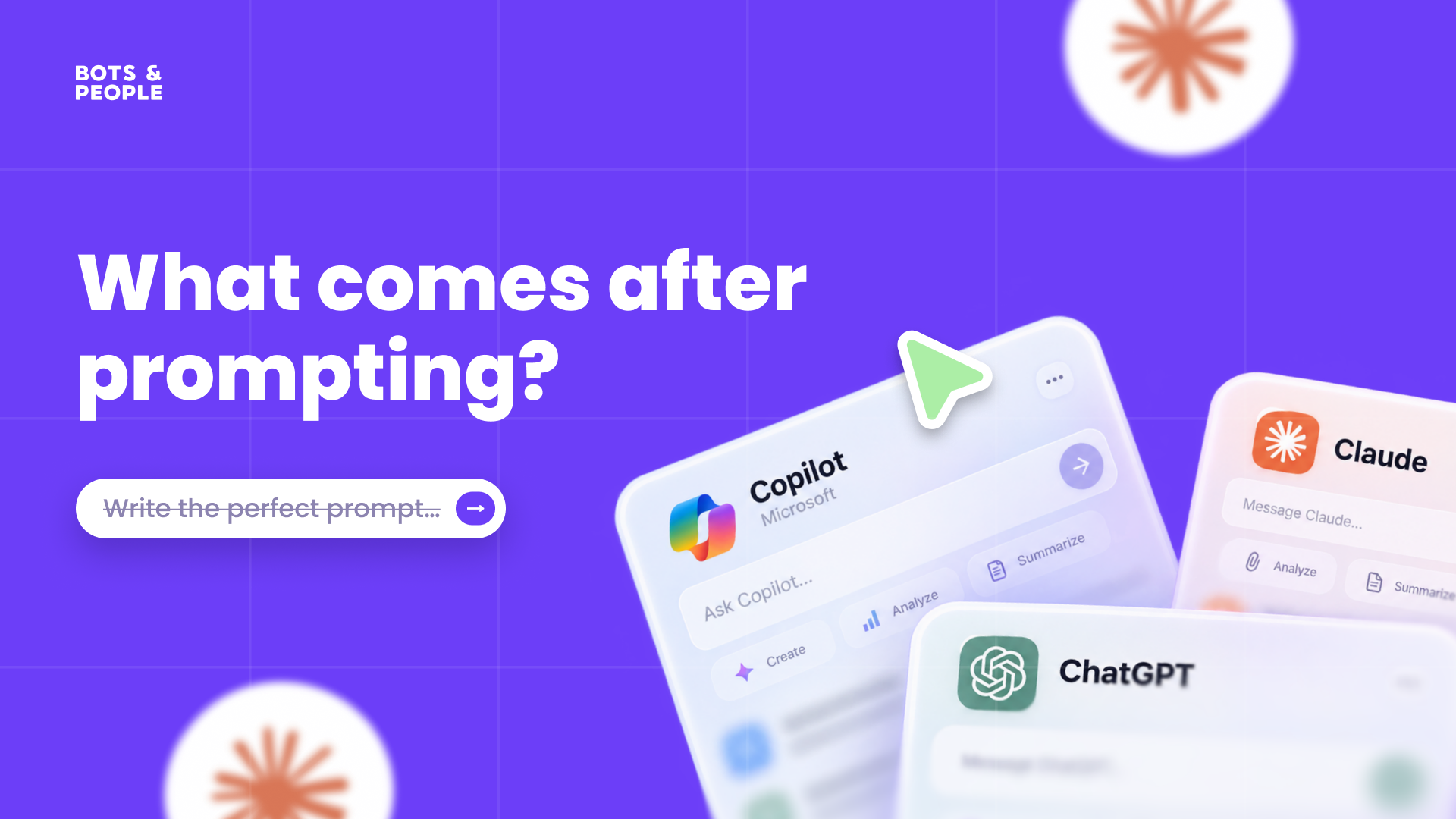
Someone pulls me aside at almost every event and asks the same question. "Our people can prompt now. We did the workshop. But the AI keeps getting smarter, and soon it will just figure out what we want. So what do we teach next?"
It is a genuinely good question, and Microsoft made it more urgent last week. On 25 September it announced Autopilot, an agent that takes a role and an objective and then works through the tasks on its own (TechSpot). When the tool starts doing the work, the skill that matters is no longer how you phrase the request.
Why prompting is a skill with an expiry date
Prompting is a tool skill, and tool skills have a short shelf life. My own estimate for AI interface skills is six to eight months. The models keep getting better at understanding sloppy instructions, the interfaces keep getting simpler, and the syntax your team learned last quarter already feels dated.
That does not mean the prompting workshop was wasted. It got people through the door, and for many employees it was the first time they used AI on real work. The problem starts when it becomes the whole curriculum, because a programme built around one tool has to be rebuilt every time the vendor ships an update.
The four skills that transfer across every tool
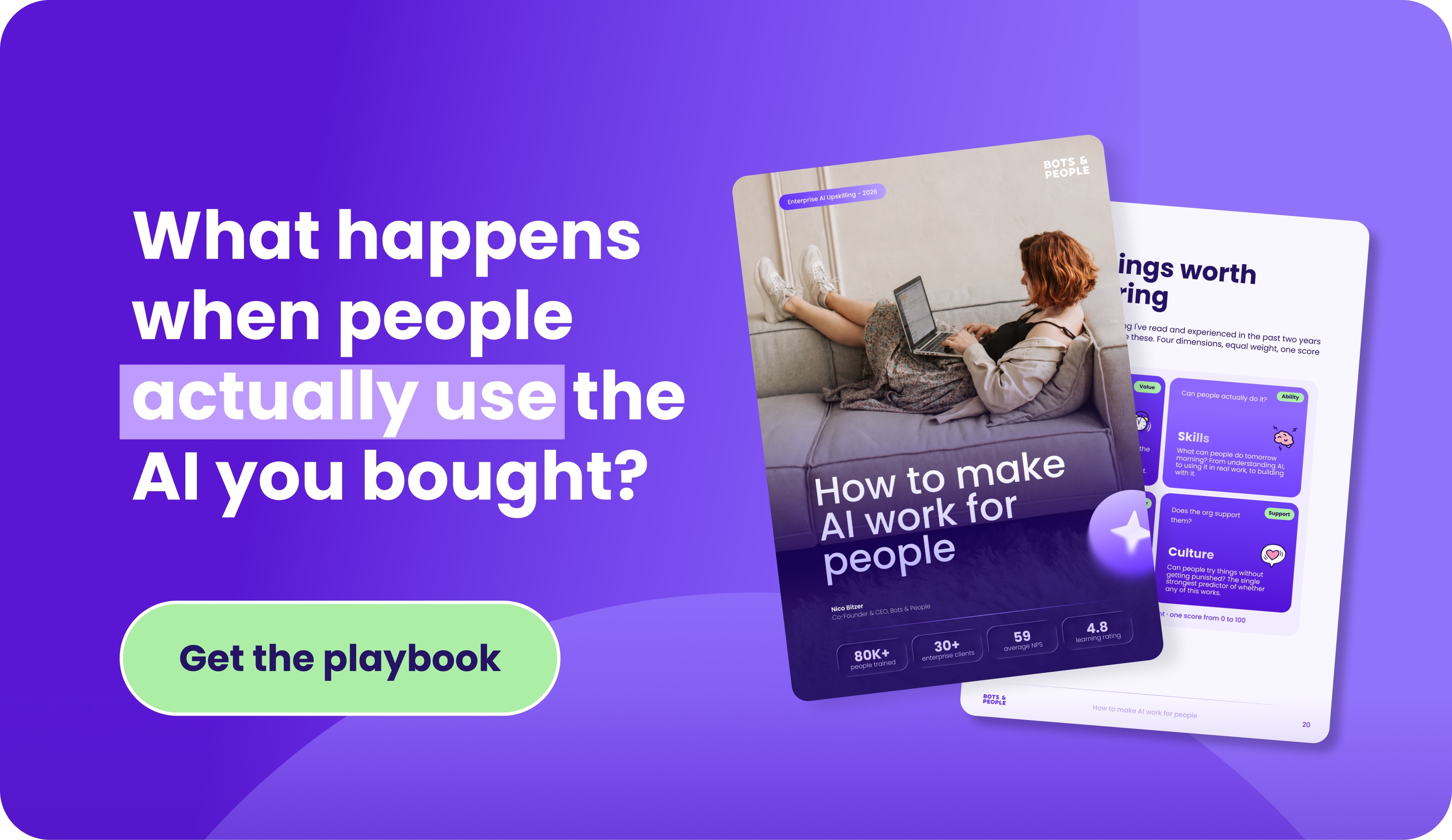
What does not expire is judgement about the work itself. In our whitepaper How to Make AI Work for People we describe four capabilities that carry over from one model and one interface to the next.
1. Deciding what to hand to AI
The first skill is deciding what to give to AI in the first place. Some tasks get faster and better, some get faster and worse, and some should never leave a human desk. People who can make that call quickly get value from every new release. People who cannot will either avoid the tool or use it for everything.
2. Judging whether the output is good
The second skill is telling whether an output is actually good or only sounds good. AI writes fluent text with confidence, including when it is wrong. In a study with 758 BCG consultants, Ethan Mollick and colleagues found that AI made people faster and better on tasks inside its capabilities, while accuracy dropped on a task that looked similar but sat outside them (One Useful Thing). Knowing which side of that line you are on is a skill, and the tool will not teach it to you.
3. Designing the workflow
The third skill is redesigning how work flows, so that AI handles the repetitive part and people handle the judgement. This is where most of the value sits. BCG's 10-20-70 rule attributes 10% of AI success to algorithms, 20% to technology and data and 70% to people and processes (Forbes). Workflow design is the practical form of that 70%.
4. Knowing when to trust the machine
The fourth skill is calibrated trust. Agents like Autopilot will act on your behalf, which means someone has to decide how much checking a task needs before it goes out. Too little trust wastes the time the agent saved. Too much trust means mistakes reach customers with your name on them.
What this means for your L&D programme
For L&D the implication is uncomfortable but clear: stop organising programmes around tools. "How to use Copilot" is a workshop that expires. "How to evaluate and direct AI in your daily work" is a capability that compounds, and it stays relevant through every model update.
In practice that changes three things:
- Build the curriculum around tasks, not features. Start from the recurring work a team already does and practise the four skills on that work.
- Change the assessment question. "Can this person use Copilot?" has an expiry date. "Can this person critically evaluate an AI-generated output?" works today, next year and in 2030.
- Make room for discomfort. Real learning means struggling with a tool in front of colleagues. If everyone rates a session five stars but nothing changes the following Monday, it was entertainment rather than training.
The part nobody budgets for: time
None of this works without time. Workera's 2026 State of Skills Intelligence Report found that the share of companies offering AI training rose from 25% to 58% in a year, while 56% of employees say they get no working time to build the skills (Workera via PR Newswire). Capability skills take practice on real work, so the most useful thing an L&D leader can negotiate this quarter may be protected hours rather than new content.
Where to start this month
Pick one team and one recurring process. List the steps, mark which ones AI could take over, and agree who checks the result and what "done" looks like. That single exercise trains decision-making, quality judgement and workflow design at once, and it gives you a before-and-after that you can measure.
Intelligence gets artificial, intention stays human. The programmes that last will be the ones that train the intention.
FAQ
Is prompt training still worth doing?
Yes, as an entry point. It gets people using AI on real work for the first time. It should be the first module of a programme, not the whole programme.
What AI skills should employees learn after prompting?
Four skills transfer across tools: deciding what to delegate to AI, judging the quality of AI output, designing workflows where AI handles the repetitive part, and calibrating how much to trust AI agents.
How do you assess AI skills that do not expire?
Ask whether a person can critically evaluate an AI-generated output on their own work, instead of asking whether they can operate a specific tool.