Last updated September 2026 · 4 min read · By Nico Bitzer, Co-Founder & CEO, Bots & People
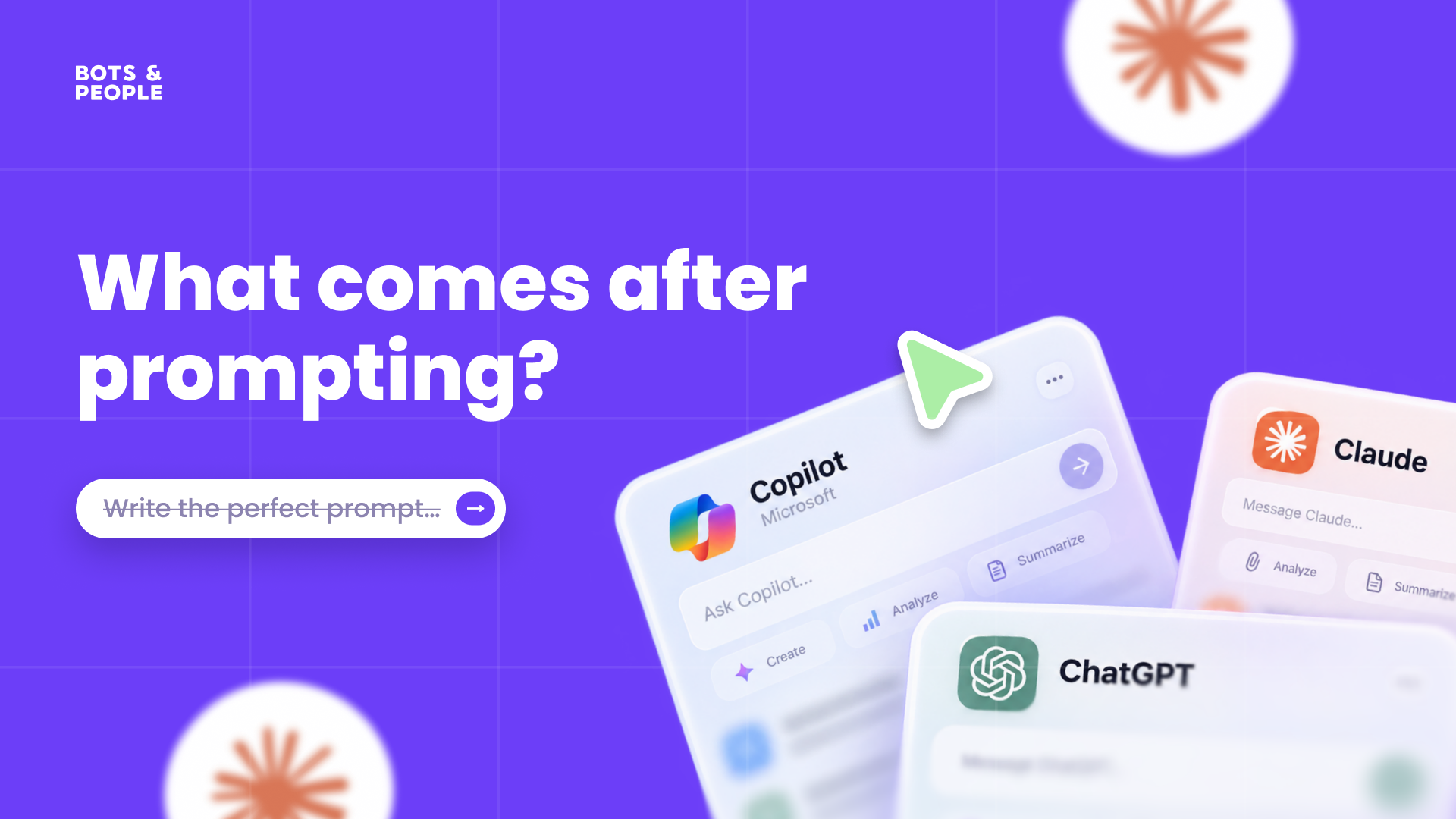
I have watched ChatGPT turn into GPT-4o, Claude, Gemini, Copilot, Mistral, Llama and a dozen more specialised tools in three years. Not one of my own decisions about how to actually use any of them has changed nearly as fast.
That gap, between how quickly the technology moves and how slowly good judgment about it develops, is the whole argument behind a line I keep coming back to: intelligence gets artificial, intention stays human. It sounds like a slogan. It is closer to an operating instruction.
Everything about the tools is changing
McKinsey's State of AI, 2025, found that 88% of organisations now use AI in at least one business function, up from 72% a year earlier. The tools themselves are the fastest-moving part of this whole story, and by the time anyone finishes a definitive guide to one interface, that interface has usually already shipped an update that makes half the guide obsolete.
IBM classifies narrow, tool-specific skills as perishable, with a half-life under two and a half years. Learning the exact menu structure of one AI assistant is a skill with an expiry date stamped on it, whether anyone tells you the date or not.
What isn't changing
Four things do not expire on that clock: deciding what to actually ask AI to do, judging whether the output is genuinely good or just sounds good, knowing when AI is the wrong tool for the job, and designing a workflow where AI handles the repetitive part while a person handles the judgment call.
I say this often, mostly because nobody has proven me wrong yet: the tool choice matters far less than most people assume. Researchers who study this describe AI's capability as a jagged frontier, genuinely excellent at some things that look hard and oddly bad at some things that look easy, and the only way to learn its shape is to keep using it and paying attention to where it disappoints you.
Measurement is what turns intention into something you can prove
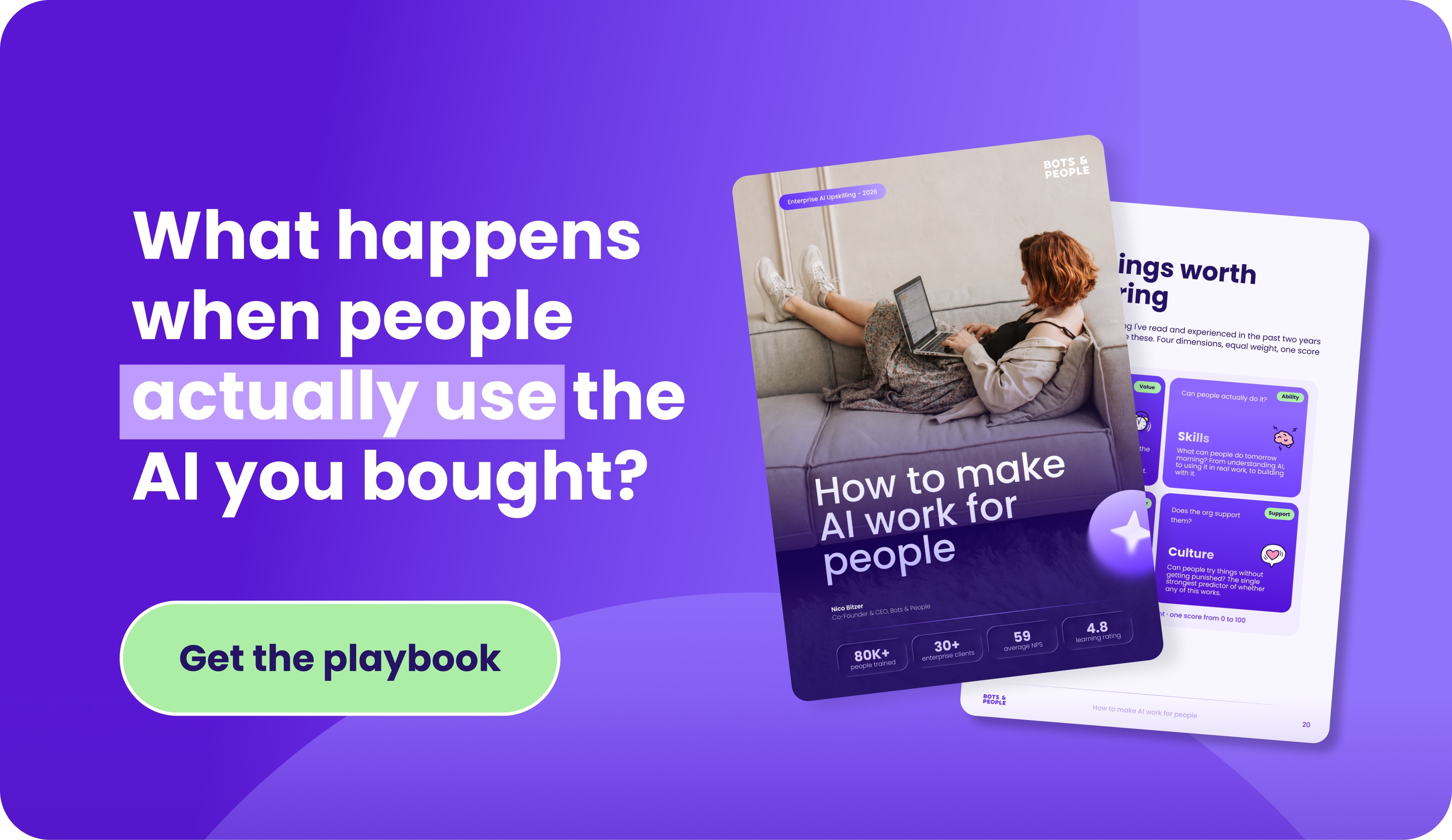
Good intentions do not show up on a board slide. A number does. That is the entire reason we built our own approach around measuring four things before anyone gets trained: outcomes, skills, adoption and culture. Intention without a way to measure it stays a feeling. Intention with a measurement attached becomes a fact someone can act on.
Where this goes next
We are opening the first round of data collection for the AI Adoption Maturity Index in 2026, a way for organisations to see where their own people actually stand against the four dimensions above, not just what a vendor's dashboard says about licence activations. If the tools keep changing and the judgment does not, the index is our attempt to measure the part that actually counts.
Frequently Asked Questions
What does "intelligence gets artificial, intention stays human" mean?
It is a way of saying that AI models keep getting more capable, but the human decisions around them, what to ask, when to trust the output, and how to design the surrounding workflow, are what actually determine the outcome, and those decisions do not become obsolete the way a specific tool interface does.
Which AI skills don't expire as models change?
Judgment-based skills: deciding what to delegate to AI, evaluating whether an output is trustworthy, recognising when a task is a poor fit for AI, and designing a workflow around those decisions. Skills tied to one interface or one prompting syntax expire far faster.
What is the AI Adoption Maturity Index?
It is a measurement tool Bots & People is launching in 2026 to assess an organisation's AI adoption across four dimensions, outcomes, skills, adoption and culture, based on data from the workforce itself rather than licence or usage dashboards alone.
How is judgment different from prompting skill?
Prompting skill is knowing how to phrase an instruction for a specific tool today. Judgment is knowing whether to ask the question at all, whether the answer is good enough to act on, and where a human still needs to make the final call, none of which changes when the underlying model does.