Workplace learning is one of the most effective ways of improving employee productivity, but that’s not the main reason why companies are pursuing it. Besides improving skills, there are visible benefits to creating a learning culture, such as increased worker autonomy and engagement, leading to higher organizational performance. Additionally, employees who have agency over their career, determining what skills to develop and what projects to take on, are likely to be more satisfied with their jobs and therefore stick with the same company for longer.
But creating culture - never mind creating learning cultures - is no cakewalk. It takes a clear strategy and thorough planning, as well as the ability to get everybody on board. Read on to learn why workplace learning is so important, discover insights from recent research about what it takes to develop a learning culture in your organization, and learn how to apply them step-by-step.
Why Foster a Culture of Learning?
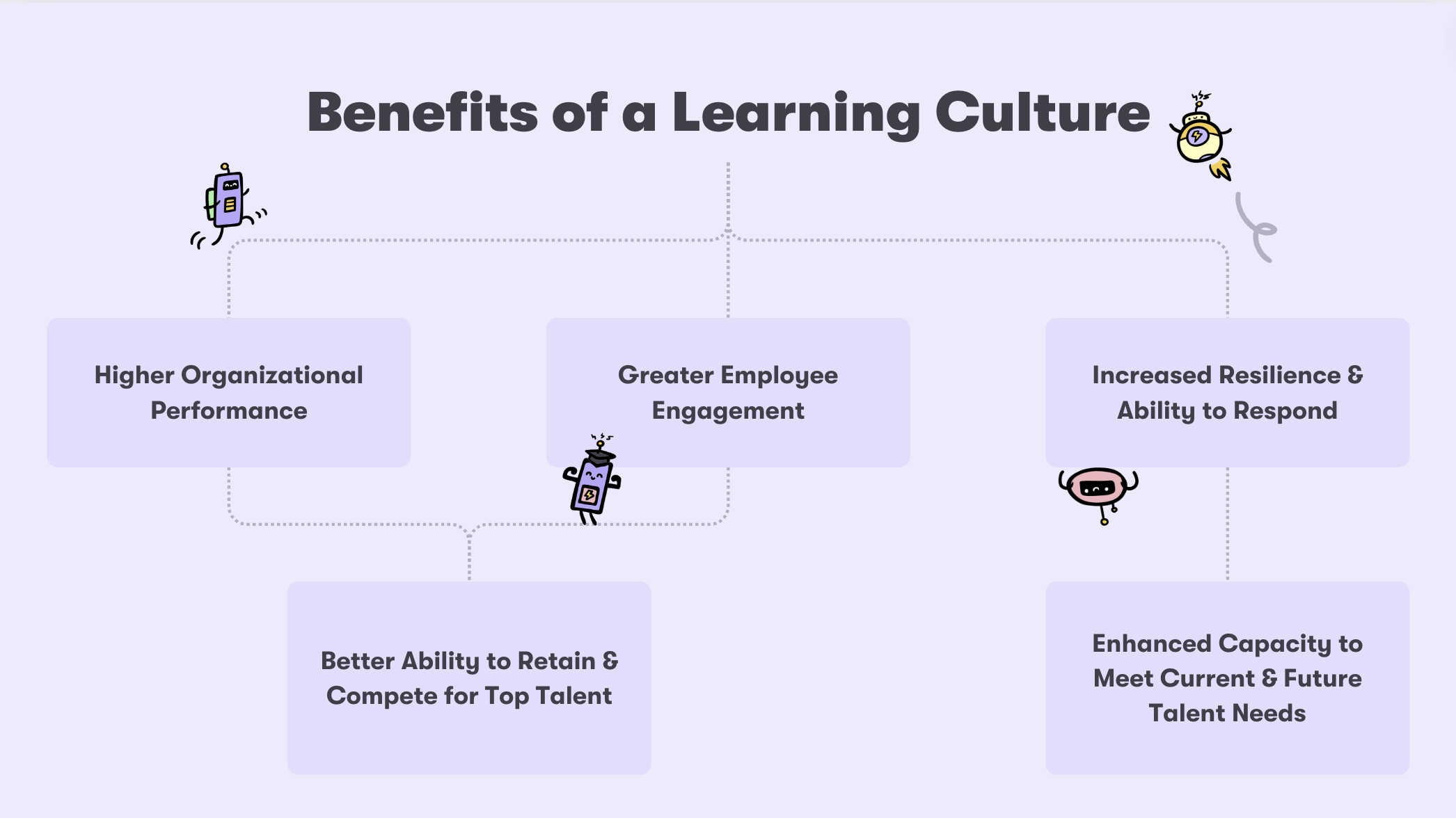
Having a continuous learning culture is a hallmark of high-performing organizations. As already highlighted, workplace learning increases engagement, skill levels, and even employee loyalty. Here are the benefits of learning in the workplace, in more detail:
1. Higher Organizational Performance
It’s no secret that you can do more when you know more, particularly when you have employees with advanced skill levels. High performers in the company can act as triggers for a snowball effect by passing on their knowledge, but also by motivating peers to level up their skills, particularly in competitive environments.
2. Greater Employee Engagement
A lot of workplace learning happens outside the classroom. One of the great benefits of having a learning culture is that it encourages your talent to take the bull by the horns and self-motivate in the face of unknown obstacles. Through peer feedback, mentorship, and a generally positive attitude towards calculated risk-taking, you will encourage your people to learn by doing and involve others in the process.
3. Increased Resilience and Ability to Respond to Challenges
It’s part of the definition of a learning culture that you have to adopt a growth mindset. This means that every adverse event is a learning opportunity and can be a great lesson if approached with the right attitude.
When you’re dealing with challenges every day, being outside of your comfort zone can become second nature. Constant exposure to novelty makes a mandate to learn in the workplace inevitable since learning becomes ingrained in the company culture through the work you are encouraged to do.
4. Better Ability to Retain and Compete for Top Talent
High-performing employees are at the top because they invest the time and energy to learn and refine their skills. That also means they likely want to continue doing this and need opportunities to grow and develop continuously in the workplace. What’s more, they like to be surrounded by people who are just as good, if not better than themselves, to stay motivated, feel appreciated, and continue learning.
5. Enhanced Capacity to Meet Current and Future Talent Needs
Training your people for the skills you need to achieve quarterly goals is something to keep in mind in present as well as future scenarios. Maximize your ability to fill the skill gap by investing in both organizational culture training and practical skill development. First, help your people adopt the learning culture mindset and then, allow them to develop new practical skills. You’ll see an impact on the bottom line sooner than you know it.
Tip: check out our competency skill assessment to identify current gaps in your team’s digital skills!
But What Is a Culture of Learning?
Simply learning at work - such as through online classes or occasional workshops - is not enough to say that you have a continuous learning culture. If learning is not integrated
with other systems of talent management, it’s difficult to create a learning culture.
When looking to define a workplace learning culture, it is important to pay close attention to attitudes and behaviors, as much as to learning opportunities. This not only concerns the attitudes of learners but also those of leadership and L&D responsibles. According to a report by MindTools, innovation in culture trumps innovation in digital: 71% of learning leaders with high-impact learning cultures report actively involving learners in learning design, compared with just 21% on average.
The Growth Mindset
A learning culture in the workplace is predicated on a willingness to try new things, learn from failures, and discuss and share the learning with others. This also means that, at the organizational level, failure should not be punished. In fact, many high-performing Silicon Valley startups operate by the mantra ‘Fail fast, fail early.’
Of course, that’s not to say that you should encourage employees to fail all the time – it simply means that you encourage a culture of innovation, experimentation, and sharing. The most important thing you can do is support a reflexive attitude that looks to understand the reasons behind failure, to make increasingly better decisions.
How Experts Define ‘Learning Culture’
According to a Harvard Business Review article quoting the CEB, the definition of learning culture is ‘a culture that supports an open mindset, an independent quest for knowledge, and shared learning directed toward the mission and goals of the organization.’ As you can see, learning is all the more valuable, the more it is linked to your company’s OKRs.
Karen E. Watkins, professor of Human Resource and Organization Development, says that ‘the learning organization is characterized by continuous learning to create a continuous transformation of an organization and its culture.’ She also emphasizes that, for learning organizations, creating a learning culture is more important than specific behaviors or ‘action imperatives.’
In a study from 2019, organizational scholar M. Srimannarayana suggested several characteristics that answer the question “What is a learning culture ?” We list the top five below:
- Organization’s learning strategies are closely aligned with business strategies
- The organization’s culture is a culture of learning
- The learning function is staffed by qualified learning professionals
- Learning is an integral component of organizational talent management
- Organizational values specifically refer to the importance of learning and development
Learning in the Flow of Work
Learning experiences that come from directly tackling something relevant to the business are, of course, the most valuable. But sometimes, the skill gap can be so large that your employees will feel intimidated by the prospect. Constantly punching above your weight can become an alienating and discouraging experience, which means that not all learning can happen without training.
In the case of structured training, such as compliance training, or courses aimed at developing new competencies, it’s still important to establish a link to the company’s goals. Ideally, any theoretical training will be connected to a practical project where your talent can use their newly acquired skills. For example, if you are asking your workforce to learn more about AI prompting, make sure you support them in developing actual use cases. That way, they bring tangible impacts to the team by applying the new skill.
How to Build a Learning Culture at Work According to Science
One of the toughest challenges in building a culture of development is dealing with employee resistance. It’s easier to continue doing things the old way than to adjust your mode of working and embrace new values, and no amount of organizational culture training will change that. But to address the resistance, you must understand the causes. Often, it comes down to a few key reasons: an attempt to avoid uncertainty, experiencing fear of failure, or dealing with disruptions in sense-making.
Support Transformational Leadership
Creating a culture of learning should ideally come bottom-up: an inside revolution! But that’s easier said than done. According to a Management Revue study that looks at organizational change initiatives, a key ingredient influencing employees’ change commitment is having transformational leaders. This was almost twice as important as having ‘change-specific leadership practices’ and especially relevant when the change had a significant personal impact on the employees.
This means that creating strong messages and having inspirational leaders is more important for getting buy-in than planning specific steps. Trust is at the core of transformational initiatives – it will lower your talent’s cynicism about change and build an environment where people can grow together.
Create Spaces for Learning in the Workplace
When thinking of learning spaces, the first picture that pops into your mind might be a traditional classroom. But learning can happen in many other spaces besides the usual classroom setting. In this case, learning spaces encompass all spaces where learning may take place, whether it's intentional or just a happy accident.
In that sense, there are three dimensions to consider when conceptualizing learning spaces: the personal, organizational, and spatial dimensions. In each of these spaces, the learner agency manifests differently. For instance, organizing self-learning requires different actions than learning in a hands-on situation such as a cross-departmental project. Just the same, learning in a dedicated space in the office, such as a workshop room, is different from learning at your desk, where urgent work tasks may arise.
In a 2016 paper dealing with learning spaces at work, researcher Natasha Kersh suggested that understanding how employees cross the boundaries of different spaces as described above can help you understand why only some learning succeeds. The transfer of knowledge and skills is closely tied to personal motivations and attitudes. Engagement and motivation are crucial for boundary crossing, i.e. learning across different contexts and environments. This process is integral to self-directed learning and involves taking personal responsibility for learning, whether in formal or informal settings.
“Individual motivations strongly relate to the potential utility and opportunities of a learning context or space. The research suggests that spatial associations may either undermine or facilitate learning attitudes.”
Consider the Learning Transfer
Your ability to take on the responsibility of learning is significantly influenced by your attitudes, motivations, and dispositions, which shape how you respond to workplace affordances and challenges. Additionally, the extent to which you are motivated to engage with learning opportunities available at work helps in applying skills across various learning spaces.
Ask yourself: is my workforce empowered to apply what they learn? Do they have a support system in place when dealing with new topics? In the SAGE Handbook of Workplace Learning, authors Evans, Guile, and Harris discuss the gradual release strategy, which supports your employees in transitioning between learning, practice, and workplace settings. This approach involves a step-by-step transfer of responsibility from the educator, trainer, or supervisor to the learner.
Account for Individual Differences
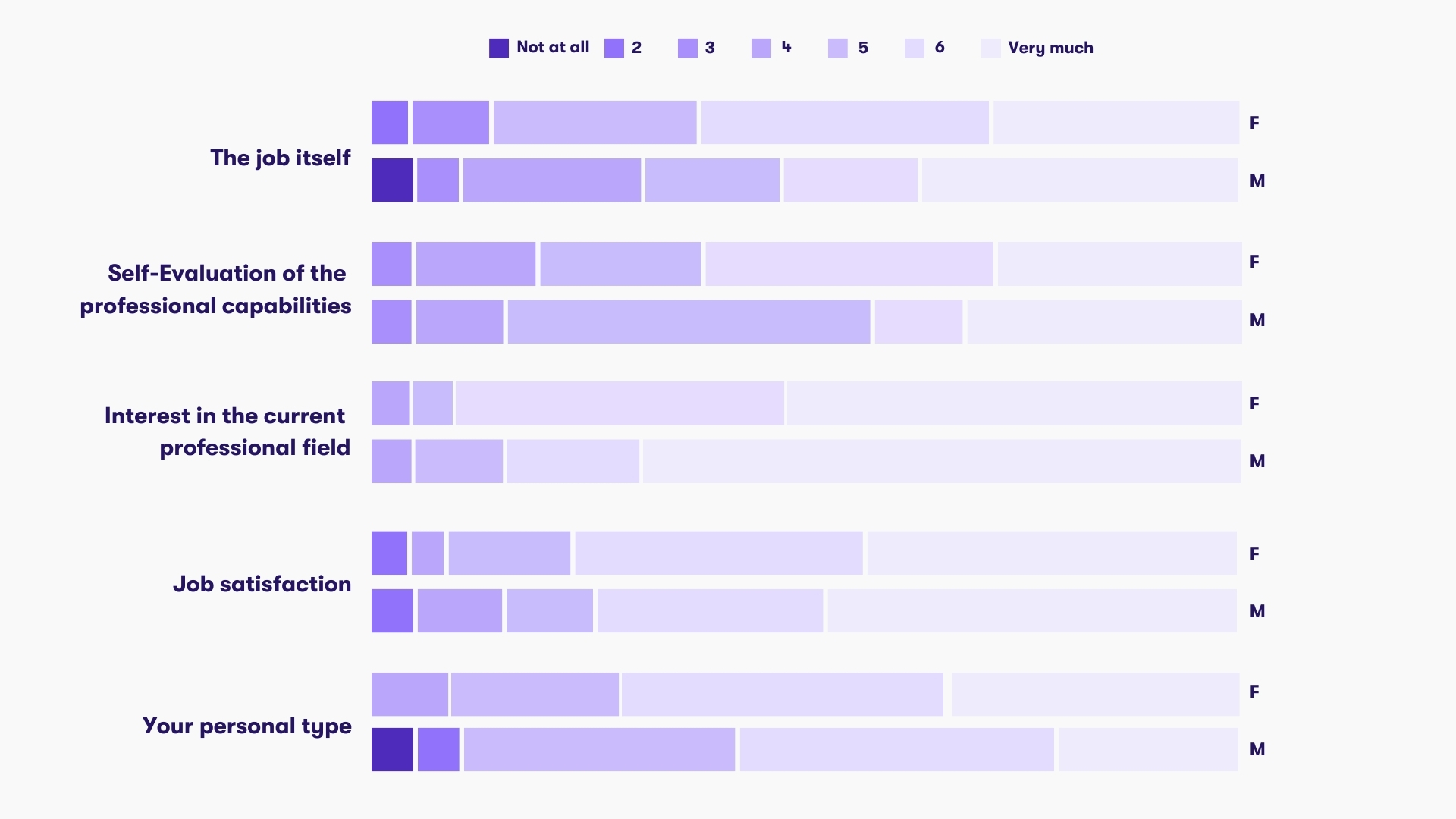
The amount and quality of learning within your organization are significantly influenced by the environment where the learning takes place. Personal factors like gender, race, and age, as well as organizational factors, impact employees unevenly when it comes to engaging with learning.
For example, a study examining informal learning in the workplace found that, generally, women tend to consider the following factors as key to building organizational culture:
- “in my organization, people help each other in the course of learning and development” and
- “in my organization, people are free to discuss mistakes and learn from them.”
In contrast, men ranked the following as their top two factors:
- “in my organization, people have mutual respect for each other”, and
- “in my organization, people help each other in learning and development.”
Darüber hinaus stuften männliche und weibliche Lernende persönliche Faktoren in Bezug auf ihren Einfluss auf das Engagement der Mitarbeiter bei informellen Lernaktivitäten unterschiedlich ein, wie in der folgenden Abbildung dargestellt.
Schritte zum Aufbau einer Kultur des kontinuierlichen Lernens
Das Folgende ist kein gebrauchsfertiges Rezept, das für jede Organisation funktioniert. Wie Sie inzwischen herausgefunden haben, ist es wichtig, die Umstände Ihres Unternehmens zu berücksichtigen, einschließlich der Branche, der bestehenden Unternehmenskultur sowie der aktuellen und zukünftigen Ziele. Bei diesen Schritten handelt es sich jedoch um praktische Ideen, wie Sie wissenschaftliche Erkenntnisse zum Lernen am Arbeitsplatz umsetzen können.
Machen Sie Lernen zu einem Teil Ihrer Werte
Wenn Sie das Lernen näher an den Kern der Identität Ihres Unternehmens rücken, können Sie nicht nur eine Lernkultur am Arbeitsplatz schaffen, sondern auch die richtigen Talente für sich gewinnen. Denken Sie über Ihr Leitbild und Ihre Unternehmenswerte nach: Gibt es Raum für „kontinuierliches Lernen“ oder zumindest ein Gefühl der Neugier und des Experimentierens? Wie wäre es mit einem Mandat zur Einführung einer wachstumsorientierten Denkweise?
Dies sind Werte, die jungen Unternehmen in der Regel dabei helfen, wettbewerbsfähig und motiviert zu bleiben — aber Sie werden vielleicht feststellen, dass es fast unmöglich ist, in einer jahrzehntelangen Organisation eine neue Einstellung zu etablieren. In diesem Fall schlagen wir vor, am Arbeitsplatz ein Kulturtraining durchzuführen. Ob durch neue Aktivitäten, die es den Mitarbeitern ermöglichen, ihre Gefühle und Einstellungen zu den vorgeschlagenen neuen Arbeitsweisen zu erörtern, oder durch teambildende Workshops, die sie ermutigen, die Werte, die Sie vermitteln möchten, zu eigen zu sein und zu leben — Veränderung kann nur durch aktive Teilnahme geschehen.
Binden Sie Lernen in Ihre Ziele ein
Wenn Sie dem Lernen keine Priorität einräumen, bedeutet dies in der Regel, dass kein Lernen stattfindet — und Sie werden es versäumen, eine Lernkultur zu unterstützen. Beginne mit kleinen Schritten und finde Wege, es so einfach wie möglich zu machen.
Anstatt beispielsweise zu verlangen, dass alle eine bestimmte Zeit dem Lernen widmen, bitten Sie sie, regelmäßige Lernaustauschsitzungen zu organisieren, um die Erfahrungen aus gescheiterten Initiativen auszutauschen. Dies hilft nicht nur anderen, dieselben Fehler zu vermeiden, sondern kann sich auch als wichtiges Instrument erweisen, um eine Beziehung aufzubauen, Mitarbeitern zu helfen, neue Ziele zu entwickeln und gemeinsam Strategien zu entwickeln, um diese zu erreichen.
Analysieren Sie Führungsstile
Führungskräfte haben einen übergroßen Einfluss auf die Unternehmenskultur. Aufgrund ihrer Macht, Entscheidungen zu beeinflussen und die Arbeit ihrer Berichte zu bestimmen, wirkt sich das Führungsverhalten auch auf die untersten Mitarbeiter aus und bestimmt, wie sie wünschenswerte Eigenschaften und Lernmethoden bei der Arbeit wahrnehmen. Wenn Ihre Führungskräfte das Lernen nicht fördern oder sich nicht die Zeit nehmen, ihre Erkenntnisse mit anderen zu teilen, wird es schwierig sein, andere dazu zu motivieren.
Denken Sie an Ihre sichtbarsten Abteilungsleiter und fragen Sie: Was ist ihr Führungsstil? Sind sie der Coaching-Typ oder der Typ, der das Tempo vorgibt und das Mikromanagement vorgibt? Betonen sie, wie wichtig es ist, durch Unterrichten anderer zu lernen? Lenken sie ihr Lernen selbst und zeigen sie Lernbereitschaft? Werden sie für eines dieser Verhaltensweisen zur Rechenschaft gezogen? Wenn Sie offensichtliche Führungsprobleme angehen, können Sie die Kultur, die Sie sich wünschen, schneller als alles andere verwirklichen.
Machen Sie Lernen sozial
Soziale Konversation ist für eine Kultur des kontinuierlichen Lernens unglaublich wichtig, da sie einen Kontext und einen Anreiz für die Konstruktion von Gedanken und Lernen bietet. Gruppen tragen zu Ihrem Verständnis bei, das über das hinausgeht, was Sie individuell erreichen könnten.
Ist es für Ihre Mitarbeiter einfach, Kontakte zu knüpfen und Ideen auszutauschen? Haben Sie spezielle Räume für informelles Lernen? Vor allem in hybriden Unternehmen oder Unternehmen, in denen das Internet im Mittelpunkt steht, ist es wichtig, die soziale Zeit aktiv zu organisieren, da dies nicht nur die beste Zeit ist, um Kontakte zu pflegen, sondern auch für den Wissensaustausch.
Egal, ob es sich um einen Slack-Channel oder einen Workshop-Raum voller Requisiten für die Zusammenarbeit handelt, du musst es deinen Talenten leicht machen, voneinander zu lernen. Noch besser: Warum hilfst du ihnen nicht dabei, monatliche oder vierteljährliche Projektvorstellungstreffen, unternehmensweite Barcamps oder andere Peer-Learning-Aktivitäten zu organisieren?
Wenn Sie noch einen Schritt weiter gehen möchten, könnten Sie auch erwägen, professionelle Lerngemeinschaften einzurichten, die sich auf bestimmte Themen konzentrieren und in denen Mitglieder des Seniorenteams als Trainer fungieren und Fragen beantworten können. Kollegen können dort Ressourcen austauschen, Feedback zu Materialien austauschen und ihre Motivation steigern, indem sie sich mit einer Community austauschen, die eine gemeinsame Vision und gemeinsame Werte hat.
Schaffen Sie sinnvolle Anreize
Zeigen Sie, dass Sie Wert auf Lernen legen, indem Sie diejenigen belohnen, die alles daran setzen, Lernen zu ermöglichen. Sicher, es ist nett, während eines Lernaustausch-Workshops Mittagessen für alle anzubieten, aber ergreifen Sie Maßnahmen, um das Lernen systematisch zu belohnen?
Wir sprechen davon, Lernen in Ihre Leistungsbeurteilungen aufzunehmen und deutlich zu machen, dass Wachstum belohnt wird. Und dann natürlich, diese Belohnung anzubieten, sei es während des Beförderungszyklus oder auf andere Weise. Die öffentliche Anerkennung von Lernmeistern, Lob und Titelbeförderungen sind ebenfalls symbolische Belohnungen, die Menschen motivieren können. Aber lassen Sie es nicht bei Worten — stellen Sie sicher, dass Ihre Mitarbeiter wissen, dass sich die Arbeit, die sie in das Lernen und Unterrichten anderer investieren, auszahlt!
Letzte Gedanken
Wir hoffen, dass Sie nach der Lektüre unseres Artikels ein besseres Verständnis dafür haben, wie Sie die Kultur am Arbeitsplatz so verbessern können, dass sie zu mehr Lernen, Entwicklung und letztendlich zu Wachstum führt. Der Prozess der Vermittlung von Lernwerten wird nicht über Nacht abgeschlossen sein, sondern erfordert das Engagement von Führungskräften, Lernförderern und Mitarbeitern gleichermaßen.
Die Grundidee besteht darin, sicherzustellen, dass Sie alle Ihre Stakeholder, von den Jüngsten bis hin zum Vorstand, einbeziehen, ihre individuellen Bedürfnisse berücksichtigen und ansprechende Wege finden, um sie dazu zu bringen, Lernen zu einem Teil der DNA Ihres Arbeitsplatzes zu machen. Und wenn Sie auf der Suche nach einem Programm sind, das das Lernen einfach, lohnend und sozial macht, schauen Sie sich unser Kursangebot und zögern Sie nicht nehmen Sie Kontakt auf!